Spelling Bee Apocalypse: How America's Children Learned to Stop Worrying and Love Participation Trophies
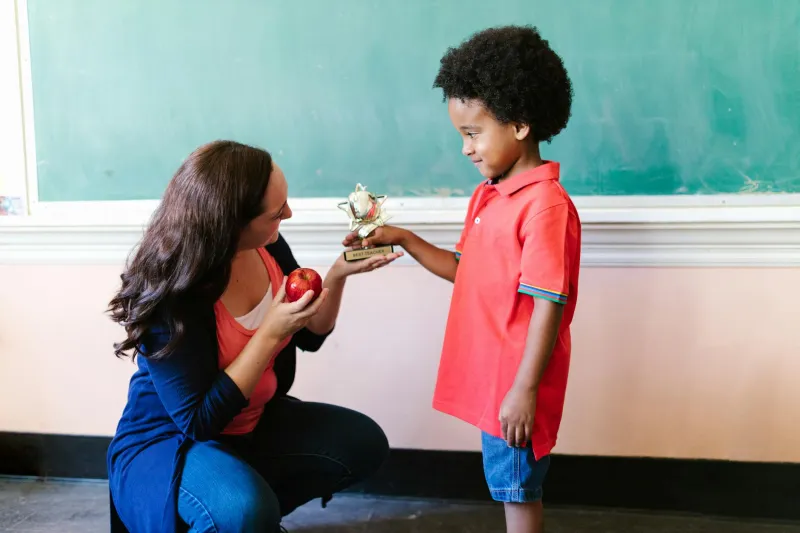
The Death of Excellence, Live on ESPN
Somewhere in suburban America, eight-year-old Madison Kowalski approaches the microphone with the confidence of a child who has never experienced failure. The word is "beautiful." She spells it "b-u-t-f-u-l" with the kind of certainty that only comes from a generation raised to believe effort equals achievement.
 Photo: Madison Kowalski, via images.squarespace-cdn.com
The judges don't ring a bell. There is no bell. Bells, according to the newly implemented "Trauma-Informed Spelling Protocols," create "acoustic triggers" and "elimination anxiety." Instead, Madison receives thunderous applause and a certificate declaring her "A Champion of Phonetic Courage."
This is the new American Spelling Bee, and it's exactly as horrifying as you think.
How We Got Here (Spoiler: It Was Inevitable)
The transformation began in 2023 when the Alliance for Inclusive Academic Excellence (motto: "Every Child is a Scholar") published a 200-page report titled "Competitive Spelling as Educational Violence: Toward Healing-Centered Literacy Practices."
The study, funded by three different foundations with "justice" in their names, concluded that traditional spelling bees constituted a form of "academic trauma" that disproportionately impacted children from "non-phonetic privilege backgrounds." The solution? Complete elimination of competitive elements in favor of what they termed "collaborative spelling celebrations."
Dr. Harmony Patel-Williams, the report's lead author and a woman who has never met a hyphen she didn't like, explained the new approach: "When we eliminate the false binary of 'correct' versus 'incorrect' spelling, we create space for authentic phonetic expression and linguistic self-determination."
 Photo: Dr. Harmony Patel-Williams, via skriber-images-prd.s3.amazonaws.com
Translation: Nobody fails anymore, because failure is mean.
The New Rules of Engagement
Under the revolutionary "Everyone Wins" format, here's how modern spelling bees now operate:
Round One: Phonetic Exploration
Children receive "starter words" like "cat," "dog," and "sun." Regardless of their spelling attempt, each participant advances to Round Two after receiving personalized affirmation from the "Encouragement Panel."
Sample encouragement: "Wow, Jayden, your creative interpretation of 'cat' as 'k-a-h-t' shows incredible phonetic innovation and sound-symbol thinking!"
Round Two: Collaborative Spelling Circle
Participants work in groups to spell increasingly complex words, with "peer spelling coaches" helping strugglers achieve "phonetic approximation." No one is eliminated because, according to the official handbook, "every spelling attempt contains wisdom."
Round Three: Celebration of Linguistic Diversity
The finale involves all participants spelling one "community word" together, with each child contributing a single letter. This year's community word was "friendship," which the Madison Elementary team spelled as "f-r-e-n-d-s-h-i-p-p-e."
The extra letters were celebrated as "abundance thinking."
The Parent Response Spectrum
Reactions from the parent gallery reveal the full spectrum of American educational anxiety:
Team Participation Trophy: Jennifer Walsh, mother of contestant Emma, explained her philosophy while clutching her daughter's "Certificate of Phonetic Bravery." "Emma spelled 'purple' as 'p-u-r-p-u-l' and the judges told her she was 'exploring alternative vowel relationships.' This is so much better than the old system where kids just felt bad about being wrong."
Team What Fresh Hell: Mike Rodriguez, whose son correctly spelled "antidisestablishmentarianism" only to be told he was "showing off his spelling privilege," had a different perspective. "My kid studied for six months. He knows words I can't pronounce. And he gets the same certificate as the kid who spelled 'dog' as 'd-a-w-g.' This is insanity."
Team Cognitive Dissonance: Sarah Chen managed to support both sides simultaneously: "I love that Sophia feels confident, but also maybe she should learn to actually spell words? I'm confused about everything."
The Judges' Dilemma
Former spelling bee champion and current "Phonetic Celebration Facilitator" Robert Martinez described his new role: "I used to be able to say 'That's incorrect, please take your seat.' Now I have to find three positive things to say about every spelling attempt. Last week I spent five minutes explaining how spelling 'elephant' as 'l-f-n-t' demonstrated 'consonant efficiency' and 'vowel minimalism.'"
The judges' new handbook includes 847 different ways to say "wrong but wonderful," ranging from "creative phonetic interpretation" to "innovative sound-symbol relationship exploration."
The Unintended Consequences
The ripple effects of participation-trophy spelling have created an entire ecosystem of educational absurdity:
Grade Inflation Crisis: Elementary schools nationwide report that 94% of students are now "spelling at grade level or above" despite the fact that many still struggle with three-letter words.
Dictionary Confusion: Webster's Dictionary has received 1,247 requests to add words like "definately," "seperate," and "alot" to their official entries, with parents arguing that "common usage should determine correctness."
Spelling Bee Industrial Complex: A cottage industry has emerged selling "participation preparation courses" that teach children how to "spell with confidence regardless of accuracy."
The International Perspective
Meanwhile, other countries watch in bewilderment. The Japanese National Spelling Federation issued a statement: "We do not understand why Americans have chosen to make their children illiterate on purpose."
The British Spelling Council was more diplomatic: "While we appreciate innovative approaches to education, we remain committed to the radical notion that words have correct spellings."
Looking Forward (Or Backward, Depending on Your Perspective)
As the 2025 National Spelling Celebration approaches (they dropped "Bee" because it implied hierarchy), organizers promise even more inclusive innovations. Plans include "silent spelling" for children with speaking anxiety, "interpretive spelling" for kinesthetic learners, and "spelling through dance" for those who "express literacy through movement."
Dr. Patel-Williams announced the next phase: "We're exploring post-alphabetic literacy frameworks that move beyond the colonial construct of 'correct' letter sequences."
Meanwhile, underground spelling clubs have begun forming in basements and libraries across America, where children gather in secret to practice actual spelling. They call themselves "The Resistance" and their motto is simple: "Words mean things."
The revolution will not be spelled correctly, but at least everyone will feel good about themselves.