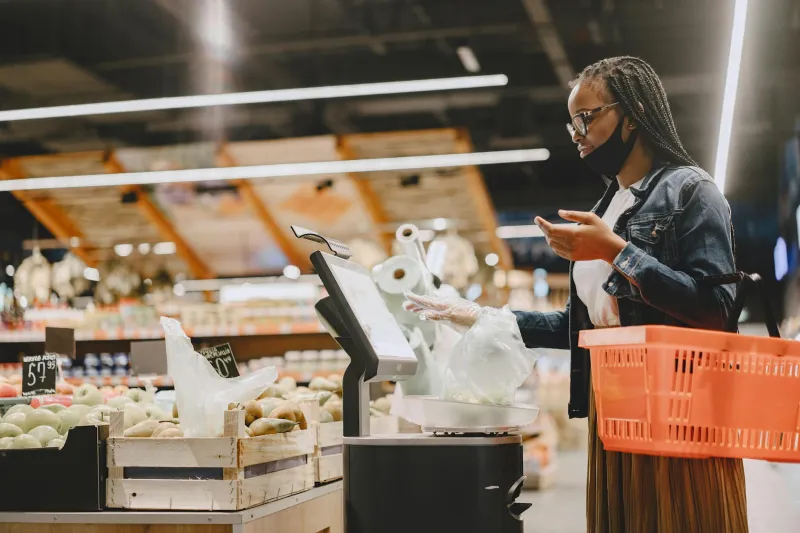
The Theater of Automated Judgment
There was a time when buying groceries involved a straightforward transaction: you handed items to a person, they scanned them, you paid, you left. Simple. Clean. No existential crisis required.
Then some brilliant corporate mind decided what America really needed was to turn every grocery run into a high-stakes performance piece where you're simultaneously the star, the stagehand, and the audience member cringing in the back row.
Welcome to the self-checkout experience, where every beep is a judgment and every "unexpected item in bagging area" announcement is basically the machine calling you a fraud in front of seventeen strangers.
The Accusatory Overlord
The self-checkout terminal doesn't just process transactions—it processes your entire moral character and finds it severely lacking. This machine has appointed itself judge, jury, and executioner of your grocery-buying competency.
"Please place the item in the bagging area."
You place the item in the bagging area.
"Unexpected item in bagging area."
It's the same item. The item you just placed. The item it literally just told you to place. But somehow, in the three milliseconds between instruction and execution, this technological marvel has determined that you've committed some sort of bagging fraud that requires immediate intervention.
The machine has achieved what no human cashier ever could: making you feel personally attacked by a banana.
The Hovering Angel of Retail Mercy
Enter the self-checkout attendant, that blessed soul whose entire job description is apparently "watch people slowly lose their minds over produce codes." They've seen it all: the executive who can negotiate million-dollar deals but can't figure out how to scan a tomato. The soccer mom who runs three households but is defeated by the concept of weighing bulk almonds.
These attendants possess an almost supernatural ability to appear the exact moment you're contemplating whether setting the whole machine on fire would be considered a reasonable response to being unable to purchase bread.
"Need help?" they ask, with the weary compassion of someone who's watched democracy die one botched avocado scan at a time.
The Produce Code Lottery
Organic bananas: 4011. Regular bananas: 4011. Wait, that can't be right. Are these organic? They look organic. But what if they're not organic and I'm committing produce fraud? What if the grocery store has a secret task force dedicated to tracking down people who misrepresent their banana origins?
The machine waits. The line behind you grows. A child starts crying, though whether from hunger or secondhand embarrassment is unclear.
You stare at the bananas. The bananas stare back. Somewhere, a philosopher writes a dissertation about the meaninglessness of modern existence.
The Bagging Bag Paradox
The self-checkout machine has very specific opinions about your bagging technique, and those opinions are consistently wrong. It wants you to place items in the bagging area, but not too quickly, not too slowly, and definitely not in any way that makes logical sense.
Place a loaf of bread in the bag? "Unexpected item."
Place a watermelon in the bag? "Please wait for assistance."
Place literally nothing in the bag while you search for your wallet? "Please place the item in the bagging area."
The machine has somehow achieved the perfect combination of being completely inflexible and totally unpredictable. It's like being micromanaged by a robot with trust issues.
The Payment Gauntlet
You've successfully scanned your items (only needed help four times), you've negotiated the bagging situation (the attendant is now on a first-name basis with your credit card), and now comes the final boss battle: payment.
Insert your card. No, the other way. No, not that slot, the other slot. Remove your card. Insert your card again. Enter your PIN. No, that's not your PIN, that's your birthday. Try again. Processing. Processing. Still processing.
Behind you, the line has evolved into its own small civilization with its own customs and mythology, all centered around the legend of the person who once successfully completed a self-checkout transaction without incident.
The Stockholm Syndrome Phase
After months of this abuse, something strange happens: you start defending the self-checkout machine. "It's faster," you tell yourself, even though you've never actually timed it. "I don't have to interact with people," you rationalize, ignoring the fact that you've now had more meaningful conversations with the checkout attendant than with your own family.
You begin to take pride in small victories. Successfully scanning a bag of chips without triggering the unexpected item alarm feels like winning a Nobel Prize. Getting through the entire process without assistance is worthy of a parade.
The Philosophical Implications
In trying to eliminate human interaction from the shopping experience, we've somehow created a more intensely social situation than ever before. Every mistake is public. Every fumble is witnessed. Every moment of confusion is performed in front of an audience of fellow shoppers who are simultaneously judging your incompetence and grateful it's not their turn yet.
The self-checkout machine has achieved what centuries of philosophy could not: it has made the simple act of buying groceries an existential question about human worth, technological progress, and whether we really need those organic strawberries badly enough to endure another round of automated judgment.
The Final Verdict
The self-checkout experience isn't just about buying groceries—it's about confronting the fundamental absurdity of modern life. It's about accepting that we live in a world where machines can land on Mars but still can't figure out that you're trying to buy a lime.
So the next time you approach those glowing terminals of technological judgment, remember: you're not just scanning barcodes. You're participating in America's greatest performance art piece, a daily reminder that progress isn't always progressive, and that sometimes the most advanced technology is just a really expensive way to make simple things complicated.
Now please place your dignity in the bagging area. Unexpected item detected.