The Great Office Thermostat Tribunal: How One Degree of Fahrenheit Became a Landmark Civil Rights Struggle
The Initial Temperature Incident
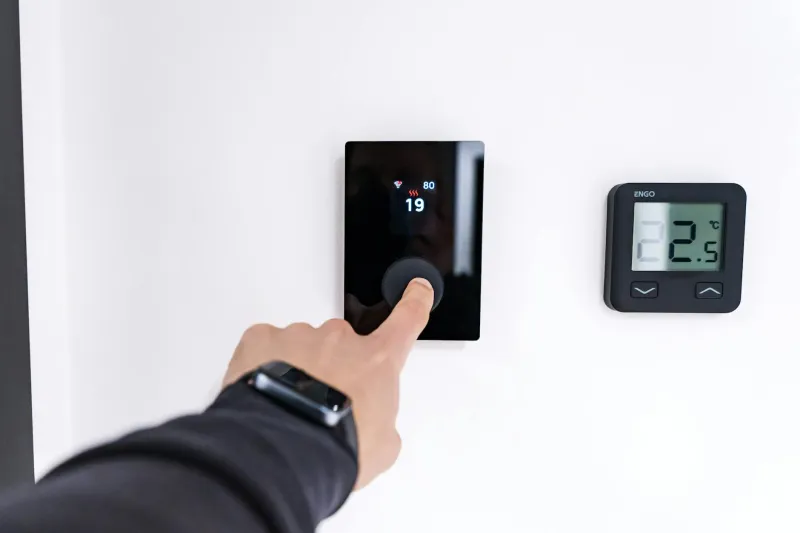
It started innocently enough. At 2:47 PM on a Tuesday, Marketing Coordinator Jennifer Walsh adjusted the office thermostat from 72 to 71 degrees Fahrenheit. Within seventeen minutes, this single degree shift had triggered what historians will undoubtedly remember as the Great Thermostat Tribunal of 2024.
The first casualty was the company Slack channel, which transformed from its usual blend of meeting reminders and lunch orders into a battlefield of thermal grievances. "Just wondering who decided the Arctic was our new office aesthetic," typed Senior Account Manager Brad Henderson, launching what would become a 847-message thread that crashed the company's Slack workspace twice.
The Faction Formation
By Thursday, two distinct camps had emerged from the temperature chaos. The Thermal Justice Coalition, led by Walsh herself, argued that the previous 72-degree setting represented "systemic warmth privilege" that discriminated against employees who "run naturally hot" and those wearing business-appropriate blazers. Their hastily assembled Google Doc manifesto, titled "Cooling the Patriarchy: A Framework for Inclusive Temperature Policy," garnered 23 signatures by Friday afternoon.
The opposition, self-branded as the Climate Resistance Movement, countered with their own document: "Frozen Assets: How Corporate America's War on Warmth Destroys Productivity and Human Dignity." Led by Operations Director Susan Martinez, who had taken to wearing fingerless gloves at her desk, they demanded not just a return to 72 degrees, but a progressive warming schedule that would reach 74 degrees by quarter's end.
The Facilities Management Intervention
By week two, Facilities Manager Dave Thompson had received 34 separate work orders related to "emergency temperature calibration needs." His initial solution—installing individual desk fans for the warm-preferring faction—only escalated tensions when the Climate Resistance Movement filed a formal complaint about "atmospheric inequality" and "discriminatory air circulation policies."
Thompson's next move proved even more catastrophic. His well-intentioned email suggesting employees "dress appropriately for the season" was immediately screenshot, forwarded, and dissected across seventeen different Slack channels. The Thermal Justice Coalition interpreted "dress appropriately" as body-shaming code language, while the Climate Resistance Movement saw it as victim-blaming.
The Emergency All-Hands Meeting
Three weeks into what the company newsletter had begun referring to as "The Temperature Situation," HR Director Patricia Chen called an emergency all-hands meeting. Her PowerPoint presentation, "Thermal Equity and You: Building Bridges Across the Climate Divide," featured 47 slides of carefully crafted corporate speak that managed to offend both factions simultaneously.
Slide 23, titled "Finding Your Personal Thermal Truth," sparked a 90-minute debate about whether individual temperature preferences were inherent characteristics deserving of workplace protection. Slide 31's "Cooling Privilege Assessment Checklist" prompted three employees to request formal accommodations under the Americans with Disabilities Act.
The Scientific Intervention
Desperate for objective resolution, Chen hired Dr. Marcus Williams, a workplace ergonomics consultant, to conduct a comprehensive "Thermal Comfort Audit." His methodology involved measuring ambient temperature at 47 different desk locations, surveying all 83 employees about their thermal preferences, and analyzing productivity metrics across various temperature settings.
Dr. Williams' final report, delivered six weeks and $12,000 later, concluded that the optimal office temperature was 71.7 degrees Fahrenheit—a finding that satisfied absolutely no one. The Thermal Justice Coalition accused him of "splitting the difference to maintain the status quo," while the Climate Resistance Movement questioned whether his thermal measurement equipment had been properly calibrated for gender-neutral temperature assessment.
The Thermostat Usage Compact
Faced with plummeting productivity and rising office supply costs (the company had purchased 47 desk fans, 23 space heaters, and one industrial-grade humidifier), Chen finally brokered what she called the Thermostat Usage Compact. This seven-page document established a rotating temperature schedule, created a formal grievance process for thermal complaints, and instituted mandatory "Climate Sensitivity Training" for all employees.
The Compact's most controversial provision was the Thermal Equity Scoring System, which awarded points based on factors including clothing choices, desk location proximity to air vents, and documented medical conditions affecting temperature sensitivity. Employees could accumulate Thermal Equity Points to gain priority in future thermostat adjustment discussions.
The Aftermath and Lessons Learned
Six months later, the office thermostat remains locked in a plexiglass case, accessible only through a formal request process that requires two supervisor signatures and a 48-hour waiting period. The Thermal Justice Coalition and Climate Resistance Movement have evolved into permanent workplace committees, meeting monthly to discuss "ongoing temperature justice initiatives."
Productivity has returned to normal levels, though the company's Slack workspace now features dedicated channels for #thermal-grievances, #temperature-alerts, and #climate-solidarity. The break room bulletin board displays a laminated chart showing the weekly temperature rotation schedule, complete with a QR code linking to the official Thermal Comfort Feedback Portal.
Perhaps most telling of all, Jennifer Walsh's original one-degree adjustment has been immortalized in the company's employee handbook as "The Walsh Incident," serving as a cautionary tale about the unintended consequences of unauthorized thermostat interaction. The lesson, it seems, is clear: in modern American workplace culture, there's no such thing as a simple temperature change—only complex moral reckonings waiting to unfold.