The Complete Homeowner's Guide to Choosing a Paint Color Without Accidentally Starting a Neighborhood Civil War
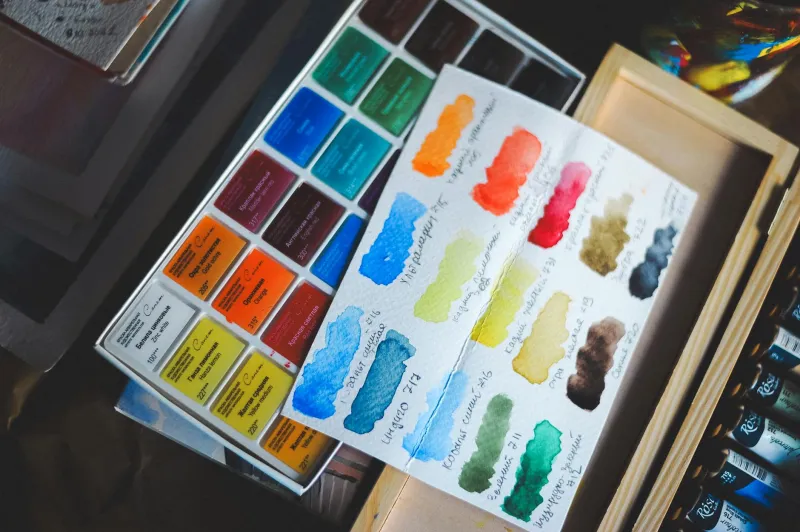
The Great Paint Panic of Maple Street
It started innocently enough. Jim Henderson of Maple Street, Overland Park, Kansas, simply wanted to repaint his 1970s ranch house. What he got instead was a three-month ordeal that would make the Treaty of Versailles negotiations look like a casual coffee chat.
"I just wanted something that wasn't beige," Henderson told Woke Watch Daily during a phone interview conducted from what he now calls his "chromatic bunker" (formerly known as his garage). "Apparently, that was my first mistake."
The trouble began when Henderson's initial color choice—a cheerful yellow he described as "sunshine optimistic"—triggered what neighbors later dubbed "The Great Citrus Crisis of 2024." Within hours of posting his paint plans on the Maple Street Facebook group, Henderson faced accusations ranging from "aggressive happiness signaling" to "potentially triggering seasonal affective disorder in winter months."
Enter the Sensitivity Spectrum Specialists
Rather than abandon his renovation dreams, Henderson hired ChromaConsult LLC, a Kansas City-based firm specializing in "culturally conscious color coordination." For $200 per hour, consultant Miranda Wavelength (yes, that's her legal name) promised to guide Henderson through what she calls "the emotional archaeology of exterior aesthetics."
"Every color carries centuries of cultural baggage," Wavelength explained during our interview, conducted via Zoom from her rainbow-walled office. "My job is to help homeowners navigate the chromatic minefield of modern suburbia while honoring the lived experiences of every possible viewer."
Wavelength's process involves a 47-point color impact assessment, including sections on "Historical Trauma Triggers," "Seasonal Mood Implications," and "Property Value Justice Considerations." The consultation fee covers what she terms "spectral sensitivity training" for the entire household.
The HOA Subcommittee Submarine
Just when Henderson thought he'd found his perfect shade—a diplomatically neutral "Mindful Mushroom"—the Maple Street Homeowners Association deployed its newly formed Color Compliance Subcommittee. Led by retired insurance adjuster Patricia Beige-Williams, the seven-member panel meets bi-weekly to evaluate paint proposals through what they call "the lens of neighborhood harmony."
"We're not trying to stifle creativity," Beige-Williams insisted during a tense sidewalk interview. "We're simply ensuring that individual expression doesn't traumatize the collective aesthetic experience."
The subcommittee's 23-page evaluation process includes impact studies on local wildlife (apparently, certain blues can confuse migrating birds), property value implications for houses within a three-block radius, and what Beige-Williams terms "chromatic gentrification concerns."
Henderson's Mindful Mushroom was ultimately rejected for being "insufficiently inclusive to residents with mushroom phobias."
NextDoor: Where Paint Goes to Die
The situation escalated when Henderson's paint saga migrated to NextDoor, the neighborhood social media platform where good intentions go to become passive-aggressive warfare. His innocent post asking for color suggestions generated 847 comments, three formal complaints to the city council, and one marriage proposal (apparently, someone found his paint-related vulnerability "deeply attractive").
Highlights from the comment thread include:
- "That green is literally violence against people with nature trauma"
- "Blue houses are a microaggression against the colorblind community"
- "Has anyone considered how this affects our local squirrel population's mental health?"
- "I'm calling my therapist about these color choices and billing Jim for the session"
The Official Woke Watch Daily Paint Controversy Ranking System
After extensive research into Henderson's ordeal and similar cases nationwide, Woke Watch Daily is proud to present our scientifically calibrated Paint Controversy Potential (PCP) ranking system. Each color is rated on a scale of 1-10 based on its likelihood to trigger neighborhood incidents:
Low Risk (PCP 1-3):
- Beige Supreme: The Switzerland of house colors
- Diplomatic Gray: Offends absolutely no one
- Vanilla Compromise: Sweet but not threatening
Moderate Risk (PCP 4-6):
- Sunshine Yellow: Aggressive happiness concerns
- Forest Green: Potential eco-guilt implications
- Ocean Blue: May trigger drowning memories
High Risk (PCP 7-8):
- Fire Engine Red: Obvious emergency service appropriation
- Royal Purple: Monarchist implications problematic
- Neon Anything: Sensory assault on neighbors
Nuclear Option (PCP 9-10):
- Confederate Gray: Self-explanatory
- Trump Gold: Political landmine
- Any Color Named After Food: Cultural appropriation concerns
The Resolution (Sort Of)
After four months, seven committee meetings, twelve sensitivity consultations, and one intervention by the Kansas Department of Residential Harmony (we're not making this up), Henderson finally received approval for "Therapeutic Taupe"—a color so neutral it technically qualifies as an absence of color.
"It's not what I wanted," Henderson admitted, standing before his freshly painted house that now blends seamlessly into the suburban beige-scape. "But at least I can sleep at night knowing I haven't accidentally triggered anyone's color trauma."
The house, while visually unremarkable, has achieved something remarkable in modern America: complete controversy-free existence. Property values remain stable, no neighbors have required therapy, and local wildlife continues their daily routines undisturbed by chromatic disruption.
Lessons Learned
Henderson's journey offers valuable insights for future homeowners brave enough to attempt exterior updates:
- Budget for sensitivity consulting (minimum $2,000)
- Allow 6-8 months for the approval process
- Consider relocating to a state with more relaxed color regulations
- Keep your therapist on speed dial
- Remember: beige is always an option
As Henderson concluded, "I just wanted to paint my house. Instead, I got a master class in modern American suburban diplomacy. Next time, I'm moving to Montana where apparently you can still paint your house actual colors without a committee vote."
The Maple Street Color Compliance Subcommittee is currently reviewing Henderson's mailbox, which they suspect might be "problematically rectangular" and potentially triggering to residents with geometry anxiety. The evaluation process is expected to take six to eight weeks.
Meanwhile, ChromaConsult LLC reports a 400% increase in business inquiries, suggesting that Henderson's ordeal represents not an isolated incident, but rather the new normal in American home improvement.
Welcome to 2024, where even your house can be a hate crime.