I Just Wanted to Sell Strawberry Jam. The Equity Audit Had Other Plans.
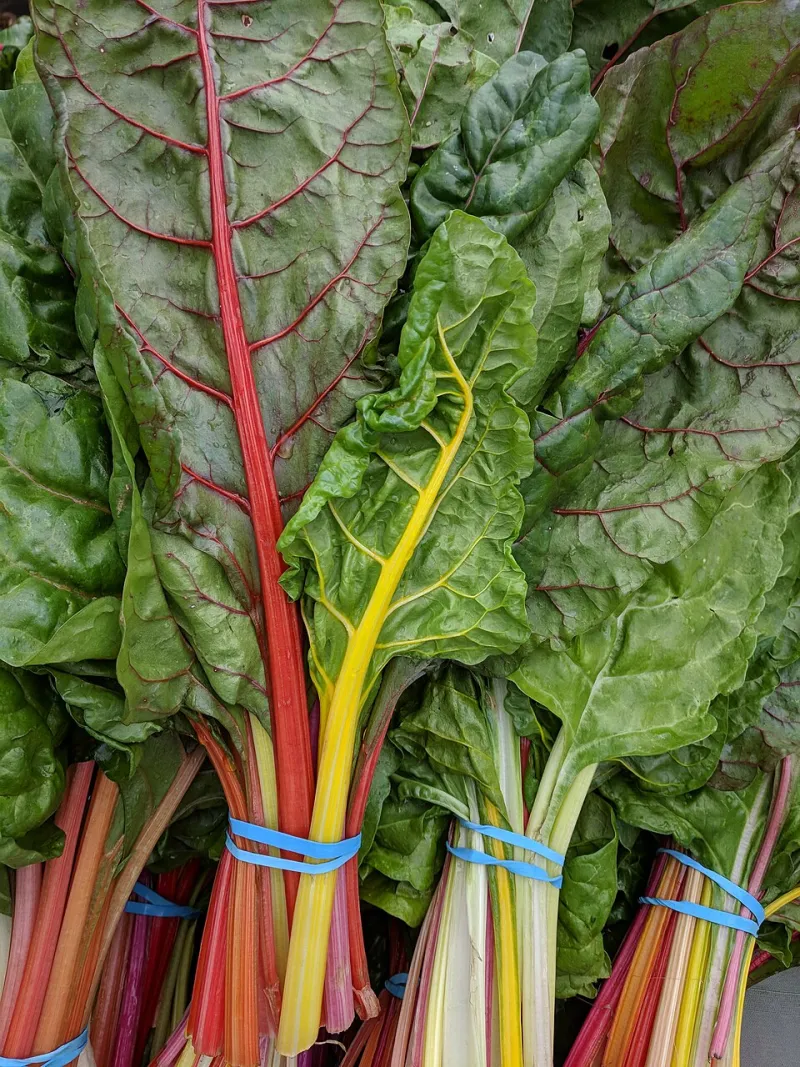
Photo: Grendelkhan, CC BY-SA 4.0, via Wikimedia Commons
There is a particular American dream that involves a folding table, a hand-lettered sign, and jars of homemade jam arranged in a pleasing pyramid. It is a humble dream. A wholesome dream. A dream that, until relatively recently, did not require a four-month vendor onboarding process, a certified letter of commitment to equitable sourcing practices, or a philosophical position on the intersection of apiculture and social justice.
Sarah Kowalczyk of Millbrook, Ohio has been making small-batch strawberry preserves since 2019. She uses fruit from a farm twelve miles from her house, mason jars from the hardware store, and a recipe her grandmother brought over from Poland. She is not, by any reasonable definition, a geopolitical actor.
 Photo: Millbrook, Ohio, via blogger.googleusercontent.com
The Millbrook Community Artisan Market's vendor application committee sees things differently.
The Application Portal: A Journey in 22 Parts
The Millbrook Community Artisan Market — or MCAM, as it refers to itself in all official communications, a level of institutional branding typically reserved for federal agencies — launched its updated vendor application process in the spring with a newsletter announcing it had been 'comprehensively reimagined to center equity, sustainability, and community accountability at every stage of the artisan journey.'
Sarah, who simply wanted a table to sell jam on Saturdays, downloaded the application.
Section One asked for basic vendor information: name, product type, contact details. Standard. Reasonable. Section Two asked for a 'sourcing narrative' of no fewer than 300 words describing the 'ethical supply chain journey' of each product. Sarah grows some of her own strawberries. The rest come from Hendricks Family Farm. She is personally acquainted with Dale Hendricks. Dale is 64 and drives a Ford F-150. She was unsure how to turn this into 300 words without fabricating a mythology.
 Photo: Hendricks Family Farm, via hipcamp-res.cloudinary.com
Section Three asked vendors to 'describe how your production practices reflect a commitment to environmental justice.' Sarah makes jam on a stove. In her kitchen. She composts the strawberry tops. She wrote this down. It did not appear to be what they were looking for.
The Pollinator Question
Section Eight is where things took a turn that Sarah describes, charitably, as 'a lot.'
For vendors using honey or bee-adjacent products, Section Eight asked: 'Please describe how your beekeeping or honey-sourcing practices acknowledge and actively work to address the disproportionate impact of colony collapse disorder on communities that have historically relied on pollinator ecosystems for subsistence and cultural continuity.'
Sarah's jam contains no honey. She is not a beekeeper. She checked the 'not applicable' box, which triggered an automated follow-up email asking her to 'reflect on whether any aspect of your production process may indirectly interface with pollinator-dependent agricultural systems,' because the strawberries, technically, involve pollination.
Sarah stared at this email for eleven minutes. She then poured herself a glass of wine and called her sister in Cincinnati.
The Equity Audit Proper
Points 14 through 22 of the application constituted what MCAM called the 'Community Accountability and Equity Self-Assessment,' a section that, in the Woke Watch Daily editorial team's professional estimation, read less like a vendor form and more like the intake paperwork for a graduate seminar on post-colonial food systems.
Vendors were asked to identify whether their business was 'BIPOC-owned, woman-owned, LGBTQ+-owned, differently-abled-owned, or first-generation entrepreneur-owned,' with a note that 'vendors representing historically underrepresented communities will receive priority placement and reduced table fees.' Sarah, a second-generation Polish-American woman who is technically woman-owned but felt strange checking a box to receive a discount on a table she had not yet been assigned, left several fields blank. This generated three more automated emails.
Point 19 asked vendors to 'articulate how your participation in the market contributes to dismantling systemic barriers in the local food economy.' Sarah's jam is $9 a jar. She was not aware she had been recruited to dismantle anything.
Point 21 asked whether vendors had completed any 'food justice or equity-centered professional development in the past 24 months.' Sarah had not. She had, however, watched a YouTube video about water bath canning in February 2023, which she felt was at least tangentially educational.
The Interview
After submitting the application — a process that required three separate uploads, two PDF conversions, and one phone call to a volunteer coordinator named Jasper who was very kind but could not explain why the portal kept rejecting Sarah's sourcing narrative as 'insufficiently specific' — Sarah was invited to a vendor interview.
The interview was conducted via Zoom by a three-person panel that included MCAM's Market Director, a 'community accountability liaison' whose exact role Sarah still cannot fully explain, and a woman named Dr. Fountain who had apparently consulted on the application redesign and sat in on interviews 'when her schedule allows.'
They asked Sarah about her grandmother's recipe. Then they asked whether her grandmother had been aware of 'the labor conditions in Eastern European agricultural systems during the mid-twentieth century.' Sarah confirmed that her grandmother had been a peasant farmer in communist Poland and was, in fact, directly familiar with those conditions in a way that the interview panel was not. This answer seemed to satisfy no one.
The Outcome and the Lesson
Sarah was approved for a vendor table. She received a confirmation email that was 600 words long and included a 'Market Community Covenant' she was required to sign, committing to 'uphold the values of equity, inclusion, and mutual accountability in all vendor-customer interactions' and to 'refer any concerns about market culture to the Community Accountability Liaison before escalating externally.'
She signed it. She set up her table. She sold 34 jars of strawberry jam in four hours. Several customers asked if she had any lavender honey options. She does not.
The table next to hers was occupied by a man selling $22 artisanal hot sauce who had, during his own interview, described his production process as 'a love letter to decolonized flavor.' He sold out by noon.
Sarah is considering selling her jam online instead. The internet, she notes, has not yet required her to take a position on pollinator equity. Give it time.
Woke Watch Daily: Keeping Score So You Don't Have To™