Canine Constitutional Crisis: How Rover's Playground Became America's Smallest Failed Democracy
The Founding Fathers Never Anticipated This
In the beginning, there was chaos. Dogs running free, owners chatting about the weather, and not a single laminated rule in sight. This was Maplewood Dog Park in the before times—January 2024, to be exact. A simpler era when Karen Hutchinson's only concern was whether her goldendoodle Precious would make friends.
 Photo: Karen Hutchinson, via awschool.com.au
Then came The Incident.
A German Shepherd named Duke allegedly "intimidated" a Pomeranian named Princess through what witnesses describe as "aggressive tail wagging." The Pomeranian's owner, Dr. Rebecca Martinez-Chen (she/her, trauma-informed pet wellness advocate), immediately called for "accountability measures."
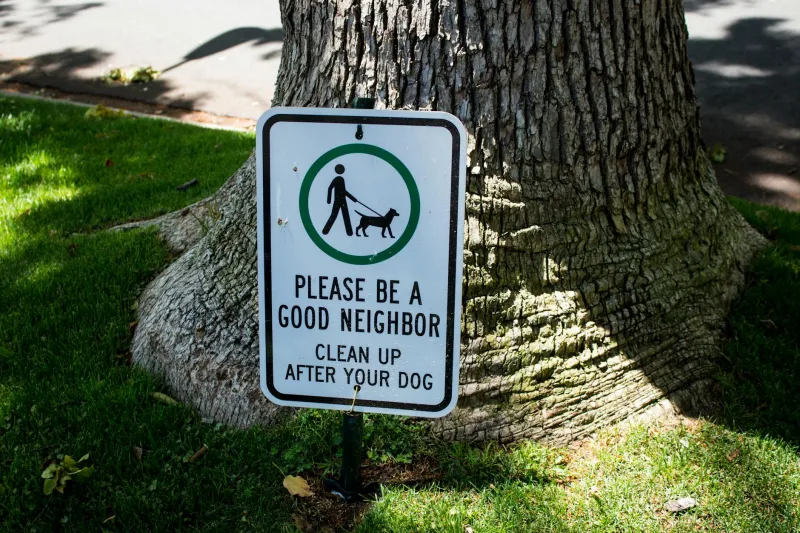
Karen, fresh off a community organizing workshop, suggested they form a small committee to draft some basic guidelines. "Just something simple," she told the Tuesday morning regular dog walkers. "Maybe five rules on a nice sign."
The Committee That Ate Itself
What followed can only be described as democratic collapse in real time. The initial five-person Rules Committee immediately split into sub-committees: Small Dog Safety, Large Dog Accountability, and Inclusive Play Practices. Each sub-committee spawned working groups. The working groups demanded representation from every dog breed demographic.
By March, the Maplewood Dog Park Governance Structure included:
- The Constitutional Convention Planning Committee
- The Breed Equity Task Force
- The Anti-Bark Discrimination Panel
- The Tail Wagging Oversight Board
- The Poop Bag Environmental Justice Coalition
- Fourteen additional sub-committees with names too ridiculous to print
Meeting minutes from April 15th reveal the moment democracy died. Motion #247: "Whereas aggressive tail wagging perpetuates dominance culture, and whereas Princess still experiences triggered responses to enthusiastic canine body language, this committee hereby declares rapid tail movement a microaggression requiring immediate intervention and restorative justice protocols."
The motion passed 23-22, with two abstentions.
The 78-Page Constitution
The final Maplewood Dog Park Code of Conduct reads like the Geneva Convention crossed with a graduate-level sociology textbook. Highlights include:
Article VII, Section 12: "All dogs must maintain culturally sensitive body language, avoiding behaviors that could be interpreted as size-shaming, energy-privilege, or breed-based intimidation."
Article XV, Section 3: "The Sniff Protocol requires verbal consent from both dogs and their human advocates before any nose-to-rear interactions may commence."
Article XXIII, Section 8: "Ball-throwing activities must be conducted in a manner that does not promote competitive capitalism or winner-loser binary thinking."
The enforcement mechanism involves a three-strike warning system, mandatory mediation circles, and something called "Canine Restorative Justice Workshops" held every other Saturday at the community center.
The Resistance Movement
Not everyone accepted the new order. A splinter group led by retired Marine Bob Thompson began meeting at the old tennis courts behind the elementary school. Their manifesto was elegantly simple: "Dogs should be dogs. This is insane."
 Photo: Bob Thompson, via www.arthistoryproject.com
The Maplewood Dog Park Liberation Front, as they called themselves, conducted guerrilla operations—removing laminated signs under cover of darkness, organizing unauthorized fetch sessions, and distributing underground newsletters with titles like "The Bark Truth" and "Unleashed: A Call to Canine Freedom."
Karen Hutchinson, now serving her third term as Chairwoman of the Executive Oversight Committee, issued a statement condemning the "reactionary elements attempting to return our community to the dark ages of unregulated pet interaction."
The Psychological Casualties
Dr. Martinez-Chen has published preliminary findings from her ongoing research project: "Trauma-Informed Approaches to Community Dog Park Governance: A Case Study in Healing-Centered Leadership." Her 400-page dissertation includes detailed psychological profiles of committee members, extensive documentation of "governance-related stress responses," and a proposed expansion of the current system to address what she terms "intersectional species oppression."
Meanwhile, Precious the goldendoodle has been enrolled in "anxiety management classes" after developing what Karen describes as "committee-related PTSD." The dog now refuses to enter the park when more than three humans are present.
The Current State of Affairs
As of November 2024, the Maplewood Dog Park operates under a complex permit system requiring advance scheduling, behavioral pre-screening, and completion of a 12-module online course titled "Conscious Canine Community Participation."
Average wait time for park access: six weeks.
Number of dogs that actually use the park: four.
Number of committee meetings held per week: seventeen.
The original request for "five simple rules on a nice sign" remains under review by the Signage Equity and Accessibility Task Force, currently in month eight of their deliberation process.
Karen Hutchinson was recently elected to the Maplewood City Council on a platform of expanding the dog park governance model to "all public spaces where humans and animals might interact." Her first initiative involves forming a committee to study the feasibility of committees.
Democracy, it turns out, works exactly as designed—until someone decides it needs improvement.